Valorant Champions Shanghai group stage as the best entry point for new VCT viewers
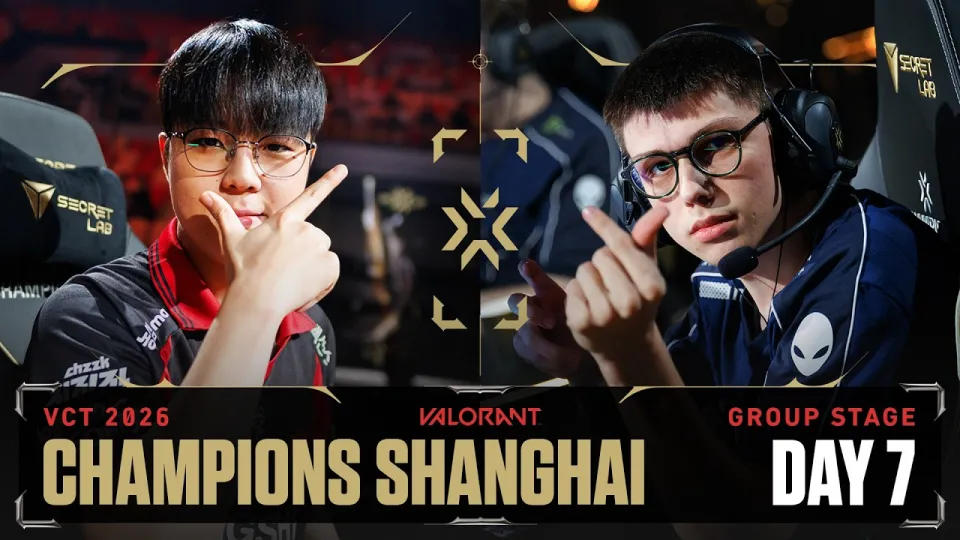
Video: VALORANT Champions Shanghai — Group Stage — Day 7
Need articles like this for your video? They help promote it on YouTube and Google — order them in the Telegram bot @sat_sit_bot. It writes articles around your video, embeds the video and publishes them on popular niche websites (no ads). Free trial — 50 articles.
Valorant Champions Shanghai is the best tournament of the 2026 season to start watching competitive Valorant, because the group stage packs sixteen teams from four regions into short, high-stakes matches where every map decides who reaches the playoff bracket. The Day 7 broadcast from the VALORANT Champions Tour channel captures exactly that tension, and the fastest way to follow brackets, results and clips between matches is the official VALORANT Esports X account. If you want one event that explains the current meta, the regional rivalries and the new generation of challengers, this is it.
What the Valorant Champions Shanghai format actually is
Champions Shanghai is the season-ending world championship, and the group stage is the filter that cuts sixteen invited teams down to the playoff field. The event window runs from September 24 to October 18, with representatives from Americas, CN, EMEA and Pacific. The broadcast description frames the stakes plainly: familiar names, new contenders and a fearless generation of challengers competing for the biggest trophy of the year.
The group stage structure matters for viewers because it changes what a single map means. Teams are not playing for style points; they are playing for seeding and survival, which is why group-stage Valorant often looks tighter and more conservative than the highlight reels from Masters. Day 7 sits deep enough into the phase that some teams are already fighting for their tournament lives while others are protecting a top seed.
Why the 2026 season made Shanghai unpredictable
The 2026 VCT season produced two different Masters champions, which is the single most important context for reading the Shanghai group stage. When two separate teams lift trophies earlier in the year, the world championship stops being a coronation and becomes an open question. The broadcast copy leans into that framing directly, describing a shift in the era and expectations that have already been broken.
That matters tactically as well. A meta with no dominant team means group-stage drafts get more creative: double-controller setups, unusual Sentinel picks and aggressive Initiator compositions all show up because no single style has been proven unbeatable. For a new viewer, the practical takeaway is simple: do not assume the favourite wins the map, and pay attention to which teams force their comfort picks under pressure.
The Day 7 broadcast and the tech pause problem
Day 7 is remembered by viewers less for a single highlight and more for its stop-start rhythm. The most-liked comments under the VOD are spoiler-blocking timestamps and complaints about an endless series of tech pauses, with several viewers asking outright why there were so many interruptions. That is a real part of the experience of watching a long live broadcast, and it is worth knowing before you sit down with a five-hour VOD.
A few practical notes for watching:
- Use the spoiler-blocked timestamp comment pinned near the top if you want to watch maps without knowing results.
- Expect dead air around technical stoppages; skipping forward in chunks works better than watching linearly.
- Watch the first pistol round and the first full-buy of each half, since those set the economy pattern for everything after.
- Keep the official X account open in a second tab for bracket context, because the broadcast itself rarely recaps other groups.
What the CN results say about the region
The harshest commentary around Day 7 targeted the Chinese teams, and it was specific rather than generic. Viewers pointed to lost anti-eco rounds, thrown 5v2 advantages and utility usage that fell apart once set strategies were disrupted. One widely liked comment argued that stronger teams from other regions missed the event entirely, which is a fair critique of any sixteen-team field built on regional qualification.
For anyone evaluating CN teams at Champions, the useful lens is round economy rather than highlight plays. A team that loses eco rounds and 5v2s is not losing aim duels; it is losing structure, communication and mid-round discipline. That pattern tends to repeat across maps, which is why the group stage exposes it so brutally. It also explains why some viewers were already writing off the region before the playoffs began.
Individual players and the small moments that travel
Long VODs live or die on small moments, and Day 7 had its share. One timestamped comment describes a split-second read where a Yoru clone looked like it was helping hold a site, the kind of utility misdirection that makes Valorant readable even to newcomers. Another thread of comments circled around a veteran player and a playful call to put him in office, which is the standard internet way of saying a fragger carried a map.
These moments are why the group stage is worth watching in full rather than through a highlight package. Utility timing, clone fakeouts and off-angle holds are the details that separate a Masters champion from a team that goes home in groups, and they rarely make the two-minute recap.
Common viewer questions about the Shanghai group stage
Most confusion around the event comes from three places: how qualification works, why the broadcast pauses so often, and whether regional strength is real or just a narrative. The sixteen-team field spans Americas, CN, EMEA and Pacific, so every group is a cross-region test rather than a regional rematch. Tech pauses are a production issue, not a competitive one, though they do disrupt momentum for players and viewers alike. And regional strength is measurable: eco conversion, retake success and clutch rates in the group stage are the numbers that predict playoff runs far better than reputation.
Useful links
- Official VALORANT Esports updates: https://x.com/valorantesports
- Facebook: https://www.facebook.com/ValorantEsports/
- Instagram: https://www.instagram.com/valorantesports/
- TikTok: https://www.tiktok.com/@valorantesports
- Twitch: https://www.twitch.tv/valorant
The bottom line on Valorant Champions Shanghai
Valorant Champions Shanghai is the clearest snapshot of where the 2026 season stands: two Masters titles split between different teams, a CN region under heavy scrutiny and a group stage that punishes structural mistakes more than aim diff. Day 7 is a useful watch precisely because it is messy, with tech pauses, blown eco rounds and a few genuinely clever utility plays mixed together. Treat the VOD as a study of economy and mid-round discipline rather than a highlight reel, and it becomes one of the more instructive broadcasts of the phase. The full Day 7 stream comes from the VALORANT Champions Tour channel, which is the source for this breakdown, and following the official VALORANT Esports X account is the simplest way to keep up with brackets, schedules and results as the playoffs approach.
Key takeaways
- Champions Shanghai runs September 24 to October 18 with 16 teams from Americas, CN, EMEA and Pacific.
- Group Stage Day 7 is the seventh broadcast day of the opening phase, streamed by VALORANT Champions Tour.
- Two different teams won Masters events in 2026 before Shanghai, so the world title is genuinely open.
- The Day 7 VOD drew viewer complaints about repeated tech pauses and CN teams losing eco and 5v2 rounds.
- Official updates, brackets and clips are posted on the VALORANT Esports X account.
Questions & answers
How many teams play in the Valorant Champions Shanghai group stage?
Sixteen teams qualify from four regions: Americas, CN, EMEA and Pacific. They compete for the title of 2026 VALORANT World Champion across an event window running from September 24 to October 18.
Why were there so many tech pauses during the Day 7 broadcast?
Viewers flagged repeated technical stoppages throughout the Day 7 stream, and the broadcast never explained each one on air. These are production-side interruptions rather than competitive rulings, but they do break momentum for players and make long VODs harder to watch linearly.
Are the CN teams really weaker than other regions at Champions?
The criticism aimed at CN teams after Day 7 was specific: lost anti-eco rounds, blown 5v2 advantages and utility that collapsed once set plays were disrupted. That points to structural and mid-round issues rather than raw aim, and those problems tend to repeat across maps in a group stage.
Where can I follow results and brackets between matches?
The official VALORANT Esports X account at https://x.com/valorantesports posts schedules, results and clips, and the same organization runs Facebook, Instagram, TikTok and Twitch channels. The VALORANT Champions Tour YouTube channel hosts the full match VODs.
Source: VALORANT Champions Shanghai — Group Stage — Day 7 · Markdown version